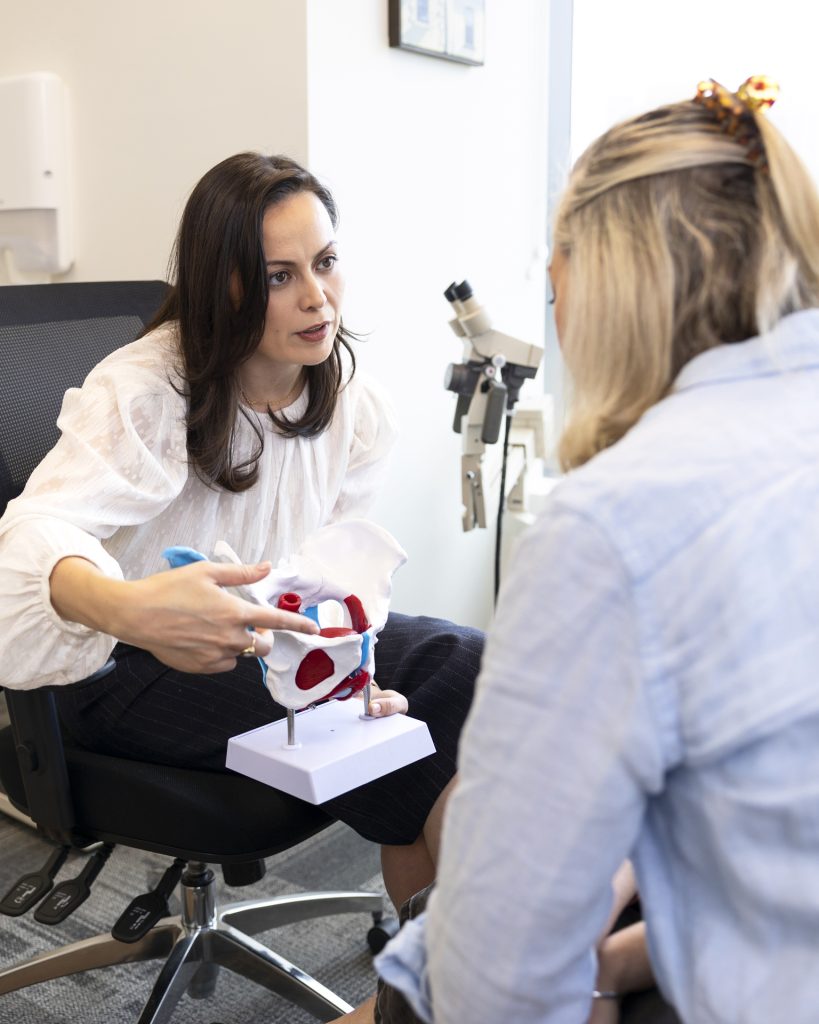
I have had the pleasure of visiting some general practices recently to deliver some education sessions on gynaecology. It has been wonderful meeting with GPs and to discuss some common and important gynaecological conditions.
I was asked by one practice to talk about cervical and endometrial polyps and I thought I would share some of the highlights from that discussion here.
Polyps are usually benign growths. Cervical polyps occur in around 2-5% of the population. Endometrial polyps are a more common and occur in 8-35% of the population.
They can cause abnormal bleeding, discharge, pain, or subfertility. Some polyps cause no symptoms. Whenever someone has abnormal uterine bleeding, it is important to do a comprehensive assessment that includes an examination and investigations to exclude possible causes. That usually involves swabs for infection, a cervical screening test, and an ultrasound. Importantly, even if the cervical screening test is up to date, it should be repeated because they are symptomatic with abnormal bleeding (and this should be written on the request). Persistent abnormal uterine bleeding that is unexplained will require a colposcopy too.
The risk of malignancy for cervical polyps is 0.1-0.2%. The risk for endometrial polyps is a bit higher at 1-3%.
In general, it is reasonable to observe polyps that are small and not causing symptoms. Large polyps or polyps that cause symptoms should be treated with removal. How to remove the polyp and where (in rooms or in theatre) depends on the size, number, and location of the polyps, as well as patient preference.
The main take home messages are:
- Most polyps are benign, but there is a small risk of malignancy.
- If the cervix does not look normal, refer to a gynaecologist.
- Symptomatic patients should have a co-test (cervical screening) even if their cervical screening is within 5 years.
Feel free to contact the rooms if you would like to discuss abnormal bleeding or a polyp. Whether you’re a GP or a patient, we’d love to hear from you!